 (carepoint.1.2.0 - photographic 33)
The program and who it serves
Medical assisting brings the patient-facing and office sides of care together. Clinical medical assistants prepare patients, measure vital signs, support examinations, and carry out trained, permitted procedures. Administrative medical assistants coordinate appointments, records, communication, and insurance workflows. Our program teaches both disciplines as parts of the same patient journey.
You can begin with no healthcare or science background, return after time away from education, or build on existing study and work experience. We start with understandable foundations, then develop the scientific reasoning, practical skills, and professional judgment behind the work.
The goal is preparation you can explain and demonstrate to a prospective employer, supported by a verifiable Curriculum Vitae of Competencies. The separate MA-C/A examination is an optional next step after program completion.
Delivery, attendance, and student support
The learning model combines remote, asynchronous coursework through My Allied with scheduled in-person instruction and practical assessment. Asynchronous means you work through released lessons without having to attend a live online lecture at the same time as everyone else; it does not mean there are no deadlines or attendance expectations.
Students are expected to sign in daily, follow their cohort schedule, and complete the work released for their current stage. Progression depends on demonstrating understanding and meeting assigned requirements. My Allied holds the course instructions, learning activities, feedback, and student records.
When you need another explanation
Instructional Approaches begin with a familiar situation, introduce a guiding question, explain the science, and connect it to medical practice. Understanding checks help identify when a learner needs another example or a slower explanation. The module design tracks up to six supporting examples and flags instructor assistance when all six have been used.
In-person learning
The program design includes two scheduled in-person days for each discipline, generally 8:00 a.m.–4:00 p.m. Administrative sessions focus on patient-care operations and care coordination; clinical sessions focus on bedside assessment, practical care, and adapting care to patient needs. Use your cohort’s confirmed calendar for dates, locations, required preparation, and any schedule changes.
Before enrolling, review the device and internet requirements, attendance and make-up rules, accessibility arrangements, required hours, and expected completion schedule with ALDHS. Your cohort materials must identify which activities require physical attendance.
Curriculum and course sequence
Start with FND 100 before moving into the paired foundation courses. Administrative and clinical studies then run alongside one another, followed by integration, simulation, and qualification work. The course names below match the portal curriculum catalog.
Phase I · Foundations
- FND 100 — Allied Health Foundations and Professional Identity
- HCS 110 — Atoms First, Biochemical Foundations in Medicine (3e)
- HCS 202 — Atoms First, Medical Anatomy and Terminology (3e)
Phase II · Administrative
- ADM 210 — Healthcare Law, Ethics, and Patient Advocacy
- ADM 220 — Health Information, Reimbursement, and Practice Management
- ADM(L) 299 — Administrative Systems and Care Coordination Laboratory
Phase II · Clinical
- CLN 310 — Atoms First, Applied Physiology, Pathophysiology, and Pharmacology (3e)
- CLN 320 — Clinical Assessment, Reasoning, and Patient Support
- CLN(L) 330 — Clinical Procedures and Diagnostic Methods Laboratory
Phase III · Integration
- MA 425 — Standard Approaches and Implementation
- MA 470 — Advanced Medical Assisting Specialties
Skills laboratories, COMPASS, and clinical experience
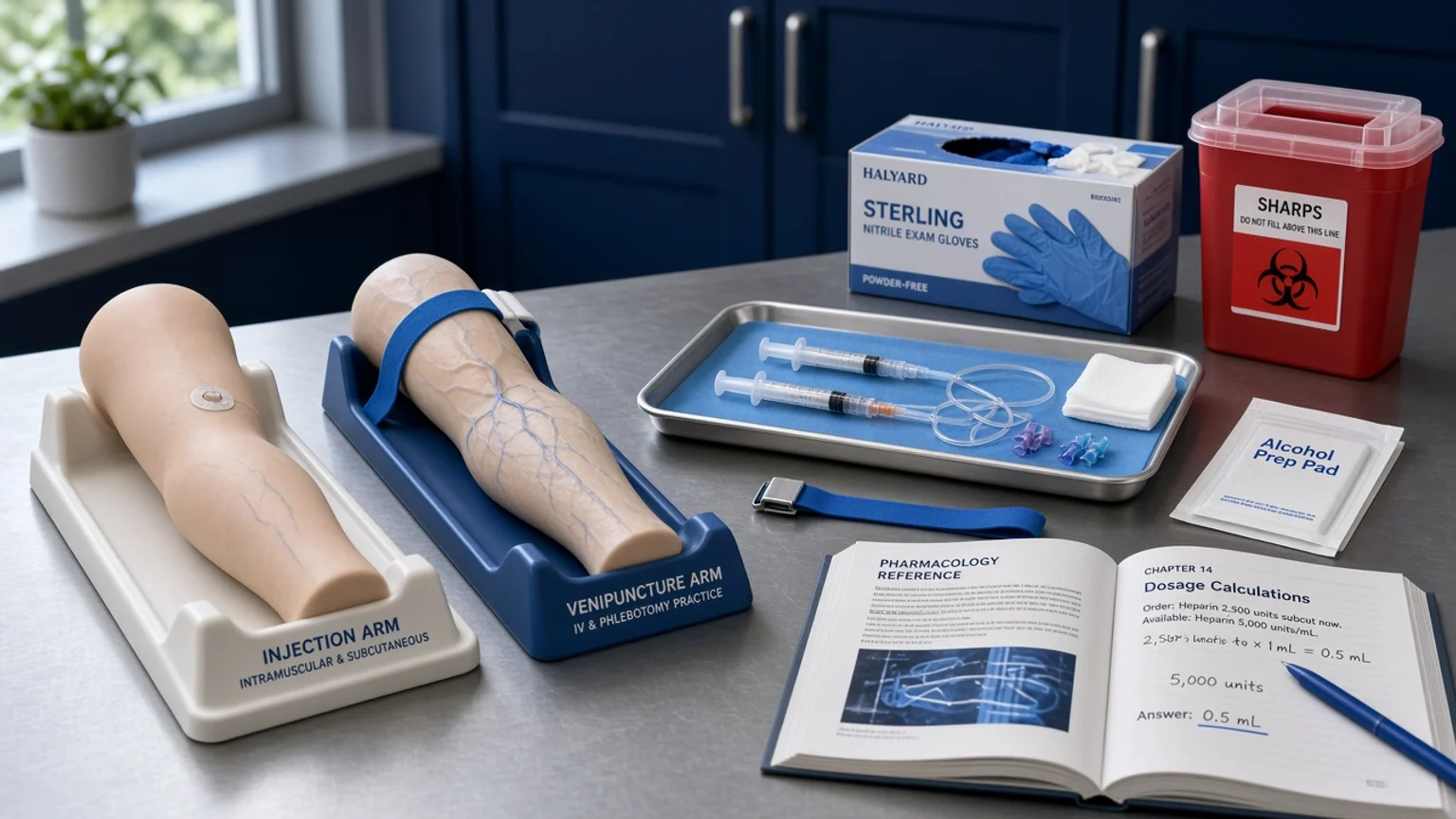
Skills laboratories turn explanation into practice: students work through procedures, documentation, communication, patient preparation, safety, and appropriate escalation. Assessment records need to show what was demonstrated and the setting in which it occurred.
COMPASS
COMPASS uses simulated medical-office situations to connect individual procedures with a complete workflow. Earlier activities focus on specific competencies; later work brings decisions, communication, documentation, and patient-care responsibilities together. Feedback and further practice help students address errors before demonstrating the required performance.
Externship and supervised experience
The program design provides a 160-hour externship route or a combined route of 80 externship hours and 80 COMPASS hours. Placement is optional and is not guaranteed; discuss the available route and its completion requirements with ALDHS before making a commitment. Your cohort plan must distinguish these hours from the other curriculum requirements.
A simulated procedure, laboratory exercise, and procedure performed on a live patient are different kinds of evidence. COMPASS does not establish live-patient injection or venipuncture proficiency by itself. Training and supervision needed for a particular workplace task must be satisfied in the appropriate setting.
Program costs and planning
Planning estimate
About $2,390 out the door
Estimated total for program participation through completion, including required starter supplies and the ALDHS MA-C/A examination fee when taken upon completion.
| Included in the ~$2,390 estimate | Notes |
|---|---|
| Program charges | Instruction, My Allied access, and published program requirements |
| Starter supplies | ID badge, one scrub set, and shoes |
| MA-C/A exam (upon completion) | ALDHS assessment fee if you choose to sit for MA-C/A after earning your Vitae |
This is a planning estimate, not a frozen invoice. Extra uniforms, recommended equipment, travel, retakes, and any outside credential (including CCBMA) remain separate. Request the current itemized schedule, payment terms, and cancellation/refund rules before enrolling. The Student Catalog will carry the official figures when published.
What you earn at completion
Completing the required program hours, competencies, and published obligations earns the ALDHS Curriculum Vitae of Competencies. It is a verifiable record of completed education and demonstrated competencies that graduates can present when seeking medical-assisting employment, whether or not they choose the separate ALDHS certification examination.
Use your Vitae to explain your preparation to a practice: the curriculum you completed, the skills assessed, and the learning experiences documented. It gives an employer concrete evidence to review when considering you for work and identifying any additional supervised training.
The program ends when its requirements are fulfilled. An eligible graduate may then choose the separate Allied Healthcare Sciences Assessment Exam Certification for Medical Assistant - Clinical and Administrative. Passing that examination earns MA-C/A.
Beginning work in California
You do not have to take the optional ALDHS examination before applying for medical-assisting work. Your completed training and Vitae can support your application to a practice willing to evaluate your preparation and provide the supervision and any further training the role requires.
California does not require state MA licensure or certification for this work. An employer can hire and train an entry-level applicant, but hiring does not remove task-specific training, competence, authorization, or supervision requirements. A Vitae documents education; it does not itself replace those requirements.
Employer criteria differ. Compare the exact job posting and ask which training records, credentials, and experience the practice accepts. Kaiser Permanente postings also vary; CCBMA is not a universal requirement across every Kaiser MA position.
Sources: Medical Board of California: MA certification FAQ; training and supervision; example Kaiser MA posting. Reviewed September 13, 2026.
The CCBMA route through current employment
CCBMA provides an application route for a medical assistant currently working under physician supervision (MD, DO, or DPM). Its published current-employment route does not list a minimum employment duration; the two-year requirement belongs to the separate previous-employment route.
- Secure medical-assisting employment that meets the route’s supervision requirement.
- Obtain employment evidence, such as a current pay stub.
- Have the required employer proficiency statement completed. It concerns actual injection and/or venipuncture proficiency, not simply willingness to employ you.
- Meet the general requirements: age 18 or older, current CPR, and signed government-issued identification matching the application name.
- Submit the application and required evidence to CCBMA for review before scheduling its examination.
Your ALDHS Vitae can support the employer’s review of your training. An ALDHS examination certificate number identifies an ALDHS award; neither substitutes for CCBMA’s required employer statement or employment evidence. Approval comes from CCBMA, rather than automatically from employment or program completion.
CCBMA eligibility and documentation · Employer proficiency form. Reviewed September 13, 2026.
Enrollment questions and your next step
Official catalog and accreditation pages are reserved and in progress: Student Catalog · Accreditation · Privacy & Records Release.
Ask ALDHS to review your background, goals, available cohort, delivery schedule, clinical-experience route, completion requirements, and itemized costs with you. If you are pursuing a particular employer or outside certification, bring that organization’s requirements into the conversation before enrolling.
Current students can use My Allied to ask for assistance with their learning or records, including a lost certificate number or a name discrepancy. Keep your Vitae and any separately earned certificate with your other professional records.
Understand your program outcomeCompletion, credentials, and record verification